
Smaller Homes, Fuller Lives
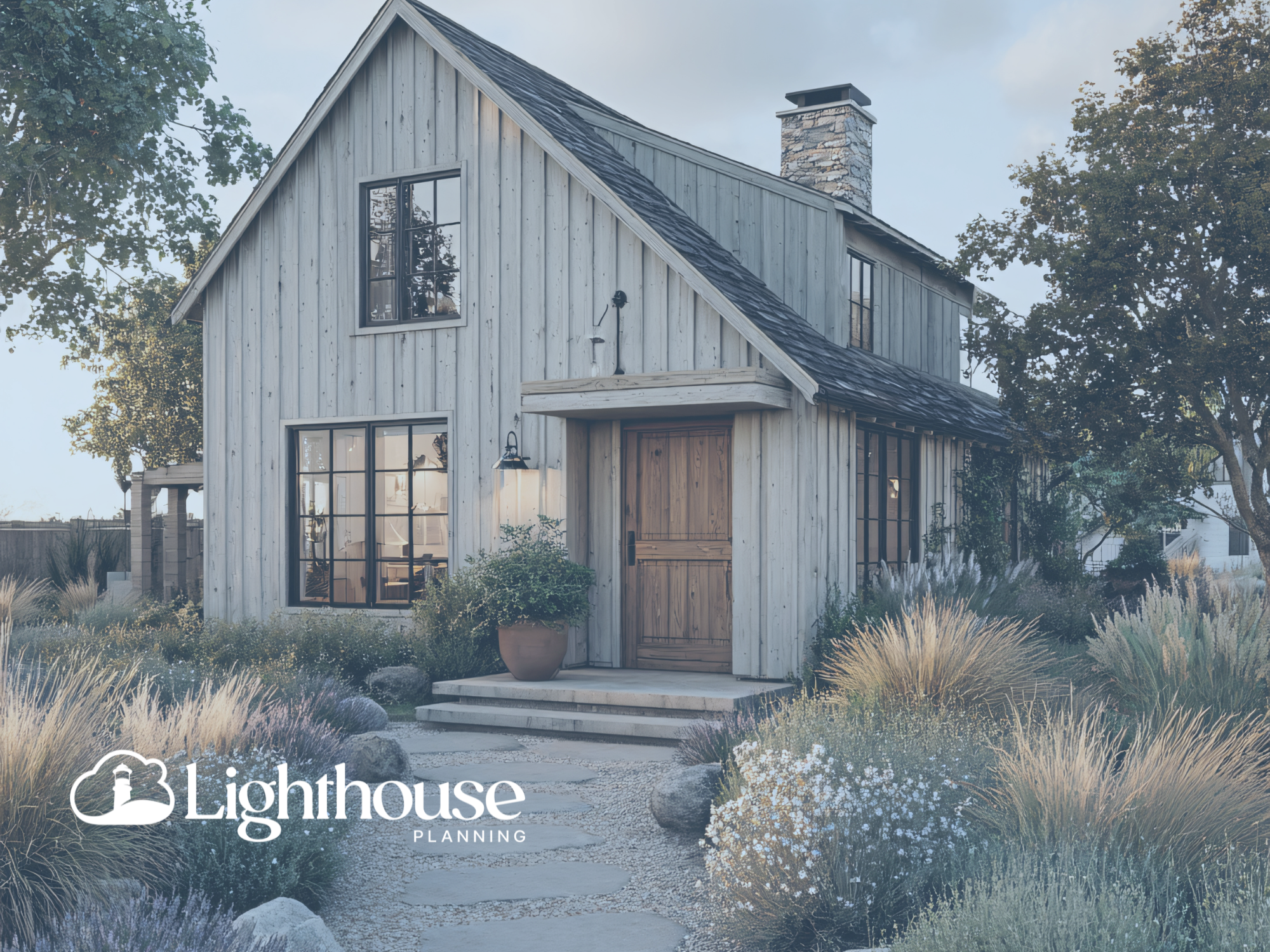
I wrote this after reading the Washington Post article, Why smaller houses can lead to happier lives.
Smaller Homes, Fuller Lives
For decades, the American Dream came with a blueprint (perhaps literally).
A little more square footage than your parents.
A bonus room.
A guest room that gets used twice a year.
A finished basement – you know, for the kids.
Bigger. Newer. Farther out with more space.
Success could be measured in square feet.
But something interesting is happening. Recent research suggests that once our basic needs are met, bigger homes don’t reliably lead to happier lives. In fact, after a certain point, the relationship between space and well-being flattens (and sometimes even reverses).
More rooms can mean more isolation. More debt. Longer commutes. Fewer shared moments. More maintenance. More distraction.
The question is no longer, “How much house can I afford?”
It’s becoming, “What kind of life am I trying to support?”
When “More” Starts Working Against You
Psychologists and urban researchers have found something counterintuitive: happiness tends to peak at moderate levels of space.
Too little space creates stress and friction.
Too much can erode connection.
Large homes often promise freedom, privacy, flexibility, and of course, status. But they can also encourage isolation. Separate rooms. Separate floors. Separate entertainment spaces. Everyone retreats into their own corner of the home… their own space. Alone.
For every square foot of free space you gain, you lose proximity.
And proximity matters more than we previously understood.
Decades of research on happiness point to the same core truth:
“strong relationships are the single biggest predictor of a good life.”
Not income. Not status. Not even health on its own.
So the question becomes less about square footage and more about design:
“Does your home make relationships easier—or harder?”
Choosing a Smaller Footprint on Purpose
When my wife and I bought our home, we intentionally chose something smaller and more affordable than what we could have purchased.

That decision wasn’t driven by frugality or fear (although admittedly I do hate the home-buying process and the emotional weight it carries). We were aligned on the idea that, at some level, we wanted to force proximity as a family.
We also wanted to ensure we had financial margin for novel experiences.
So we kept our “at-home” financial footprint light. Housing is usually the single largest fixed cost in a household (if not childcare), and we wanted margin in our budget (and life).
That margin has allowed us to prioritize experiences over stuff (though we still have our fair share of decluttering to do). For three years, we’ve taken about 10 trips per year – something that would be more difficult if more of our resources were locked into square footage we didn’t truly need.
With our first kiddo on the way, we don’t want a house that allows everyone to disappear. We want shared spaces to make up the majority of the home. Fewer rooms to retreat into. More natural collisions. More togetherness by default.
Connection doesn’t happen accidentally.
A home subtly shapes behavior. It can nudge people toward isolation or toward relationship. We wanted the latter.
Rethinking the American Dream
This is where the traditional American Dream starts to feel… outdated.
A growing number of people are quietly designing alternatives:
Smaller homes with more flexibility
Nomadic or semi-nomadic living
Renting intentionally to preserve freedom
Living abroad, where homes are smaller but lives feel fuller (something we might explore)
Choosing walkable communities over sprawling square footage
These changes reflect a shift from status-driven consumption to intention-driven living.
The Real Trade-Off
Every financial decision is also a life decision.
Housing doesn’t just determine your monthly payment, it determines your flexibility. Your stress level. Your proximity to community. And how you spend your time, energy, and attention.
When people feel misaligned in their lives, it’s often not because they made bad decisions. It’s because they made unexamined ones… following inherited scripts instead of consciously choosing.
A bigger house might be the right answer for some people. But it shouldn’t be the default.
The real cost of housing ought to be measured in what it makes possible for your life (or doesn’t allow for).
A Question Worth Sitting With
So here’s the question I keep coming back to; not just as a financial planner, but as a human being:
If your home were designed to support the life you actually want to live – not the one you were told to want – what would need to change?
That question doesn’t demand an immediate answer.
But it might reshape everything that comes next.